Frequently Asked Questions
I want to learn Taiji – what do I need for it?
Not much to start with. Openness, curiosity and a willingness to learn and explore are a good beginning. Focus, patience, modesty, stamina and perseverance can all be developed through training – if you already bring a bit of them with you, all the better!
What will make Taiji really engaging is turning it into a proper practice, not just by coming to class but also by training on your own. You don't need to train for an hour every day; when you're starting out, even a couple of minutes each day can make a big difference, helping your body and nervous system retain what you worked on – so that the next session can build on the previous one rather than starting from scratch again. We have a dedicated page online to help you get started with your home practice. This is how old habits can gradually give way to new ones: what we learn in class can become more natural and qualities can get embodied. That continuity also makes the whole process much more rewarding.
Do I need special clothing?
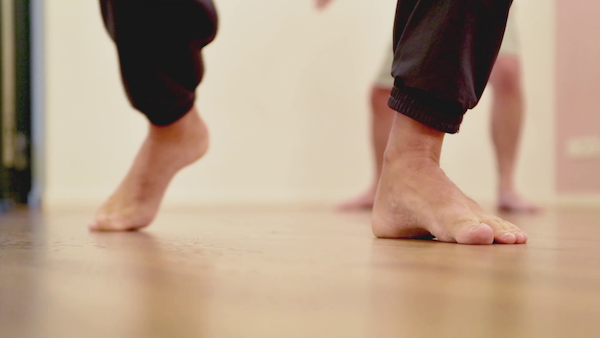
Comfortable, loose-fitting clothes are perfectly fine. I won't make you buy silky pants. What matters is that you can move freely. We usually train barefoot; you can wear socks, but be aware that the wooden floor can be a bit slippery. Shoes are not allowed in the training space.
As we train in close proximity, please come with clean feet and hands, avoid strong perfume or deodorant and put away jewellery or accessories that might be distracting to you or others (and get in the way).
What kind of atmosphere can I expect?
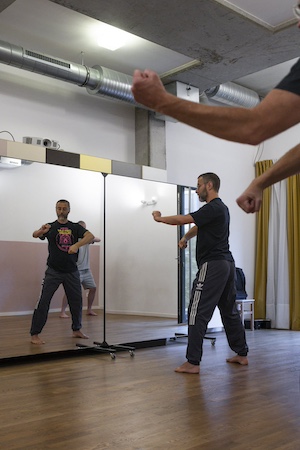
We do our best to make everyone feel welcome. The training room lends itself to smaller groups, so classes are usually around 6 people, rarely more than 8, which allows everyone enough space and attention. It feels like a small, friendly group training together, balancing focused work with a relaxed atmosphere. People with different levels train in the same class: whether you’re a beginner or more advanced, the training may look the same from the outside – but as you gradually develop body awareness and skill, you’ll begin to focus on different aspects of the practice.
What languages are used during class?
Classes are generally taught in German, English, or a mix of both depending on who is attending. The language used during class naturally adapts to the needs of the participants. During individual practice and corrections, I can also offer clarification in French or Italian if needed. The occasional Denglish expression or collective search for the right German word is also part of the experience!
What can I gain from Taiji?
You can definitely gain better mobility, stability and greater body awareness and sensitivity – which can help you develop a healthy and strong posture and keep it while moving. Combined with the mental aspects of the practice and grounding breathing work, this can also translate into a greater sense of inner calm and confidence. If you regularly engage with partner training, you can develop some self-defense skills over time: you'll not become invulnerable but tougher to deal with physically and mentally.
Together, these qualities are part of what we call gongfu: a skill that develops through long-term practice and cultivation. Nobody can give you gongfu. We can show you the toolbox, but you have to develop the skill yourself.
None of this happens overnight: these qualities simply grow through the training process itself. The more regularly you practice, the more they’ll develop and become part of your everyday life.
What if I want to lose weight or get a 6-pack?
Well, this shouldn't be your main motivation – don't believe every marketing claim you come across about Taiji! Promises of miraculous effects are misleading.
Still, Taiji training is much more physically demanding than most people think. The idea that Taiji is an activity where you never break a sweat is a distorted one. Taijiquan incorporates various strengthening methods. Even stances, basic movements and forms develop different levels of physical strength. At certain training stages, additional equipment can be used for further strengthening, with positive effects on martial arts skills, the practitioner's health and understanding of Taiji. Approaching Taiji mainly as a way to lose weight or build a six-pack misses the point, though. It is much more than a workout.